The ad platforms you relied on yesterday have fundamentally changed their algorithms. If your media buyer is still trying to execute a digital marketing playbook from 2022, you are throwing money into a black hole.
For years, the independent retail strategy was simple: place a tracking pixel on your website and rely on third-party cookies to follow your potential customers around the internet. If someone looked at a mattress on your site, you could effortlessly bombard them with mattress ads across fifty different websites for the next month. In 2027, that level of granular, third-party surveillance is dead. Privacy mandates, evolving browser restrictions, and consumer demand have reshaped the digital landscape. Here is how modern media buying actually works, and how you must adapt to stay visible.
Navigating the Loss of Third-Party Tracking
The elimination of the third-party cookie means you can no longer rent data from external websites to figure out what your local market is doing. Apple’s iOS privacy updates and Google Chrome’s restriction of cross-site tracking effectively severed the data cord marketers used to rely on.
When independent furniture and appliance retailers lost this visibility, many saw their digital acquisition costs skyrocket. The hyper-targeted campaigns that used to guarantee a steady stream of showroom traffic suddenly stopped working because the platforms could no longer confidently identify who was in the market for a sofa. To navigate this new privacy-first web, retailers have to stop fighting the privacy walls and start playing by the new algorithmic rules.
Harnessing AI-Driven Bidding on Google and Meta
When granular tracking died, the tech giants replaced it with artificial intelligence. Google and Meta realized they could not track individual users across the web anymore, so they built predictive AI models to guess consumer behavior instead.
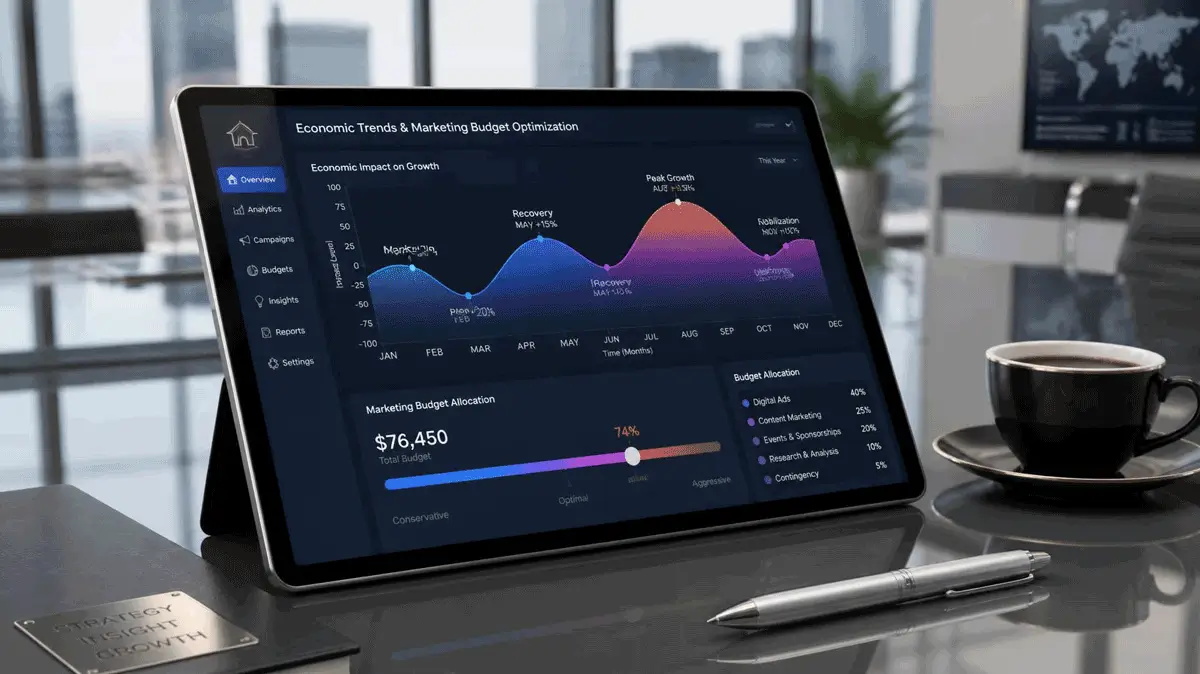
Today, media buying is less about manually selecting a target audience (e.g., “Homeowners aged 35-55 within 10 miles”) and more about feeding high-quality data into an AI engine. Campaigns like Google’s Performance Max or Meta’s Advantage+ use machine learning to process billions of real-time signals. You give the AI your creative assets, your budget, and your ultimate conversion goal, and the algorithm autonomously decides where, when, and to whom the ad should be shown to get the cheapest result.
To win in 2027, your marketing team must shift from being manual dial-turners to AI data managers. Your success dictates on how well you structure your campaigns to feed these algorithms the right conversion signals from your website.
Relying on First-Party Data as Your Ultimate Safety Net
Since you can no longer rely on external platforms to tell you who is shopping for furniture, you must own your audience. First-party data—the information you collect directly from your customers and website visitors—is your ultimate safety net.
Your point-of-sale system and your CRM are sitting on a goldmine of privacy-compliant data. Every phone number, email address, and past purchase history is a piece of data you completely control. By securely uploading your encrypted customer lists directly into advertising platforms, you can build powerful “lookalike” audiences. The AI analyzes the traits of people who have actually bought from you in the physical world and goes out to find more people just like them in your local market.
Furthermore, shifting budget into direct SMS and email marketing ensures you can reach your most qualified buyers without paying a toll to Mark Zuckerberg or Google. Stop relying on third-party tracking algorithms that change overnight. Build your list, feed the AI, and take ownership of your digital traffic.
Since 1984, R&A Marketing has kept independent furniture, mattress, and appliance retailers ahead of the digital curve. If your advertising ROI dropped when privacy laws changed, our media buying team is ready to deploy a modern, AI-driven strategy for your store.