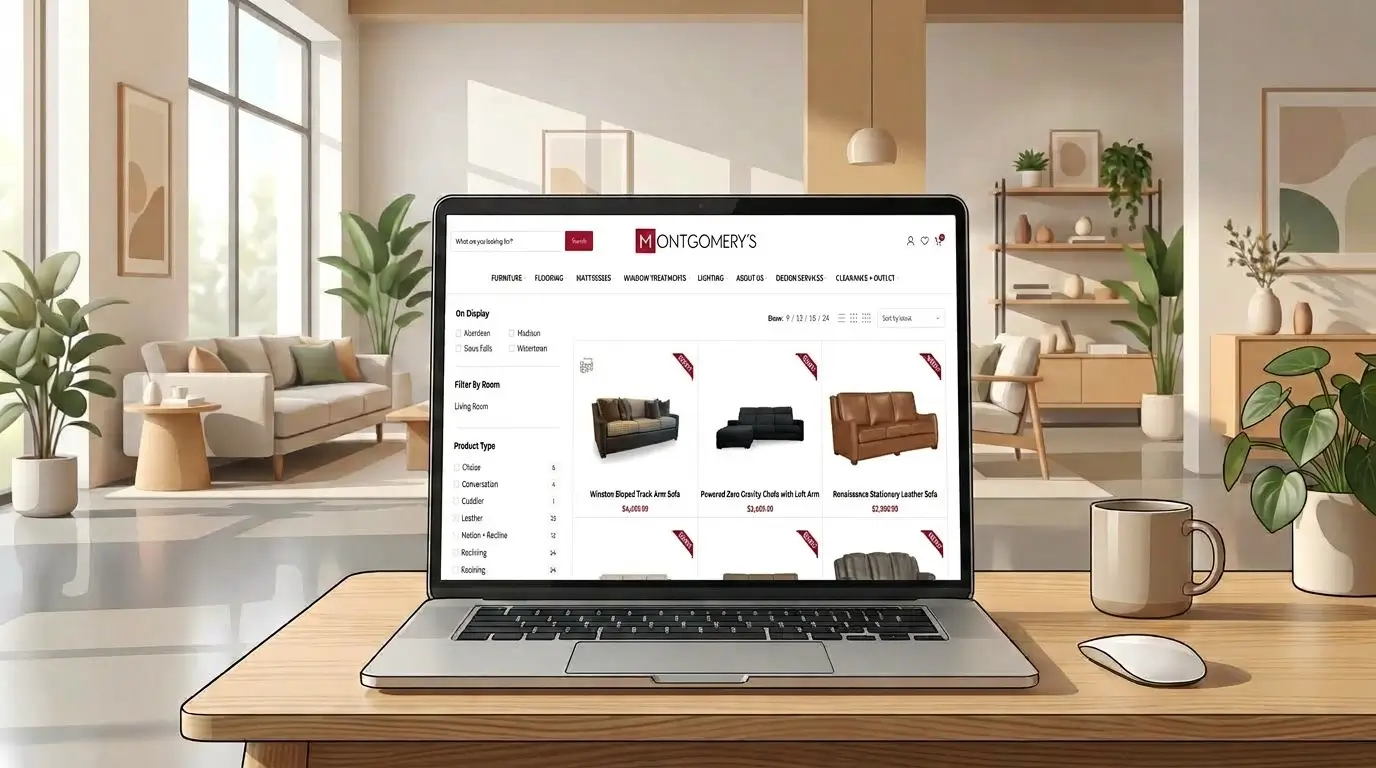
You just spent thousands of dollars building a beautiful, lightning-fast e-commerce website. The homepage looks incredible, the navigation is seamless, and your branding is on point.
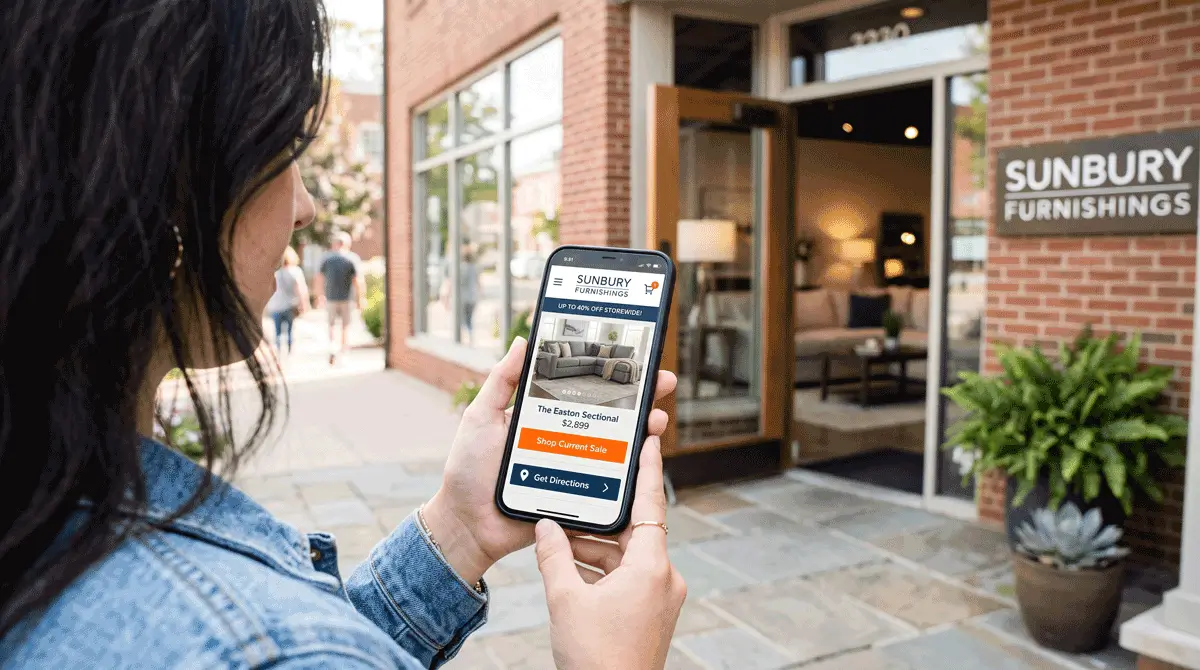
But when a potential customer searches for a specific sofa in your town, your beautiful website is nowhere to be found.
Why? Because when it came to your individual product pages, you stopped at the starting line. You plugged in the raw data feed, hit publish, and decided to just “live with it.”
Let’s be clear: as independent retailers, we are incredibly fortunate that furniture manufacturers provide product data, SKUs, and baseline descriptions. If they didn’t, you would be forced to manually measure, photograph, and write specs for thousands of items from scratch. Manufacturer data is a massive operational gift that builds the foundation of your digital catalog.
But it is exactly that—a foundation. It is not the finished house.
When you rely only on the raw data feed without adding your own retail context, you are publishing the exact same page as 5,000 other retailers across the country. In a search environment increasingly driven by AI and strict local SEO algorithms, duplicate content makes you invisible. To win the click, you have to do more.
Here is how you need to structure, present, and elevate your product layouts to stop blending in and start driving local foot traffic.
It’s About Presentation, Not Just Paragraphs
Retailers often mistakenly believe that fixing their product pages means they have to manually rewrite 10,000 manufacturer descriptions. While unique copy helps, modern SEO and customer conversion rely heavily on the layout and presentation of the page as a whole.
AI search engines and modern shoppers are looking for a complete, localized shopping experience. They don’t just want to know how wide the sofa is; they want to know what it looks like to buy that sofa from you.
To differentiate your pages from the national big box stores who are using the exact same manufacturer feed, your product page layouts must incorporate these essential retail elements:
1. Store-Specific FAQs
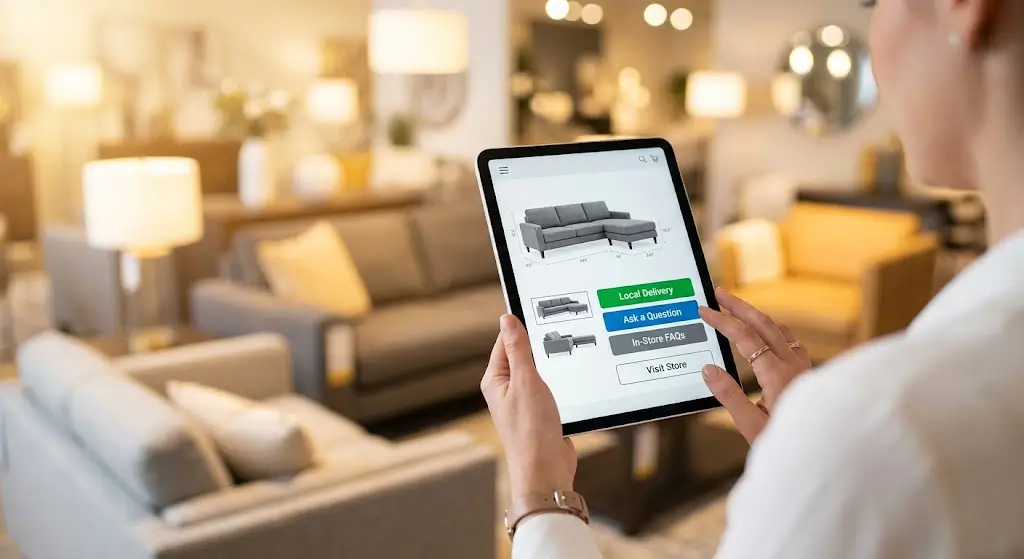
The manufacturer tells the customer about the foam density; you need to tell them about the buying experience. Every product page should feature a structured FAQ section that answers the questions holding them back from visiting your showroom.
- Do you have this on the floor to test?
- Can I customize the fabric in-store?
- What kind of warranty does your store provide beyond the manufacturer’s guarantee?
2. Upfront Delivery and Logistics
Nothing causes online cart abandonment or lost showroom visits faster than hidden logistics. Don’t make the customer hunt for a separate “Shipping” page. Your product layout should explicitly state your local delivery capabilities right next to the “Add to Cart” or “Visit Store” button. Highlight your white-glove delivery zones, haul-away services for old furniture, and realistic timelines for special orders.
3. Frictionless Contact and Next Steps
If a customer is looking at a $3,000 sectional, they are going to have questions. If the only way to contact you is a generic “Contact Us” link in the footer, you will lose them. Build frictionless contact tools directly into the product layout:
- A button to “Text us a question about this item.”
- An option to “Request a fabric swatch.”
- A calendar widget to “Book an in-store design consultation.”
Building the Ultimate Local Product Page
When you combine the manufacturer’s foundational data with your store’s unique operational advantages, you create a product page that Google loves to rank.
Instead of a generic page with a single paragraph and a price tag, your layout now functions as a 24/7 digital salesperson. The manufacturer provides the exact dimensions, the material specs, and the beautiful high-resolution imagery. You provide the localized FAQs, the transparent delivery information, and the immediate customer service access.
This hybrid approach transforms a sterile digital catalog into a rich, structured data powerhouse. It tells Google—and your local customers—that you aren’t just dropshipping items from a warehouse, but that you are an active, local retail authority ready to serve them.
Stop Settling for “Good Enough”
The days of treating your e-commerce catalog like a set-it-and-forget-it digital flyer are over. Relying strictly on the raw data feed and deciding to “live with it” simply isn’t good enough anymore.
Your manufacturers have given you the raw materials. Now, it is your responsibility as the retailer to build the experience. Take ownership of your digital showroom layouts, give your customers the localized information they actually need, and watch how quickly your website turns online browsers into in-store buyers.
Since 1984, R&A Marketing has helped independent furniture, mattress, and appliance retailers dominate their local markets. If your product pages are blending in with the competition and your local SEO is suffering, we have the web services and marketing strategies to build the ultimate digital showroom. Learn More >