Buying furniture takes more thought than most online purchases. Customers compare sizes, materials, colors, room layouts, and pricing before they commit. AI agents help furniture retailers guide shoppers through those decisions with smarter product recommendations that increase trust and raise average order value.
Why Are Furniture Retailers Investing in AI Product Recommendations?
Furniture retailers are using AI agents because shoppers often leave websites without buying when the search experience feels confusing or overwhelming. AI tools help narrow choices, recommend matching products, and guide customers toward complete room purchases instead of single-item orders.
Unlike standard recommendation engines that only show “similar products,” AI agents analyze customer behavior, browsing patterns, style preferences, price sensitivity, and room intent. This creates recommendations that feel more personal and useful.
For furniture retailers, this matters because furniture purchases usually involve:
- Higher price points
- Longer buying cycles
- Multiple decision-makers
- Style coordination concerns
- Delivery and sizing considerations
AI agents reduce decision fatigue by helping customers feel confident about what fits their home and budget.
How Do AI Agents Actually Work in Furniture Ecommerce?
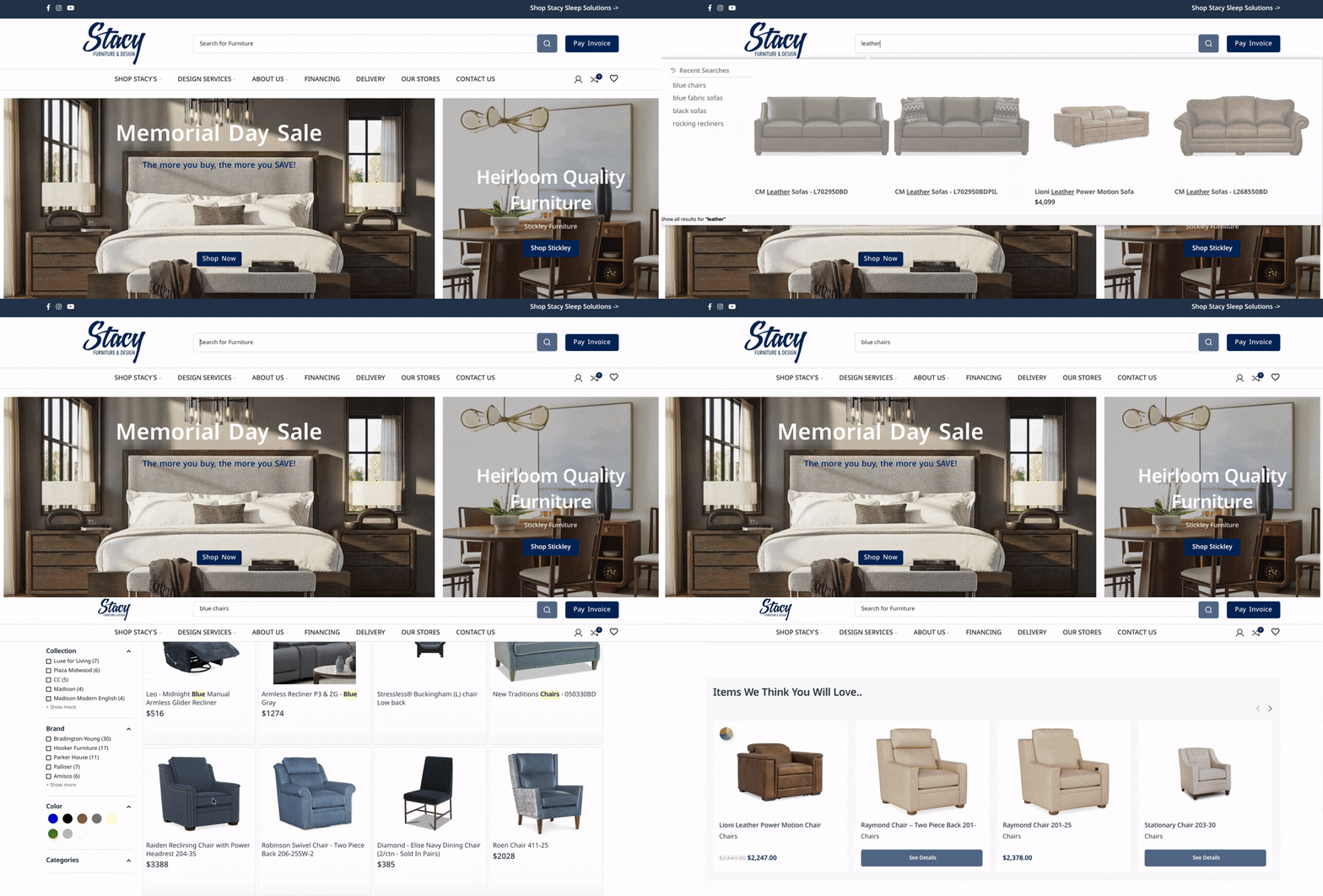
AI agents collect and interpret customer behavior in real time. They look at signals such as search terms, product views, abandoned carts, room categories, and buying history to predict what a shopper may want next.
A furniture retailer can use AI agents to:
- Suggest matching coffee tables with sofas
- Recommend larger sectionals for bigger room layouts
- Highlight stain-resistant fabrics for families with children
- Show products within a shopper’s preferred budget range
- Recommend bundles based on room style preferences
This process goes beyond static automation. AI agents continuously adjust recommendations as customer behavior changes during a browsing session.
For example, if a customer starts viewing modern oak dining tables after browsing farmhouse furniture, the AI can quickly shift recommendation patterns instead of continuing to push unrelated products.
Why Do Furniture Stores Struggle With Low Average Order Value?
Many furniture retailers focus heavily on generating traffic but miss opportunities to increase basket size. Customers may buy a sofa but leave without purchasing side tables, rugs, lighting, or accent chairs that complete the room.
One major problem is poor product discovery. Shoppers often cannot visualize which products work together. Another issue is category separation. Furniture websites frequently organize items by department instead of by room design or lifestyle.
AI agents solve this by connecting products based on:
- Interior design compatibility
- Customer buying trends
- Material combinations
- Room dimensions
- Seasonal preferences
This approach helps retailers increase average order value naturally without aggressive upselling.
Can AI Agents Improve Room-Based Shopping Experiences?
Yes. Room-based recommendations are one of the strongest uses of AI in furniture retail.
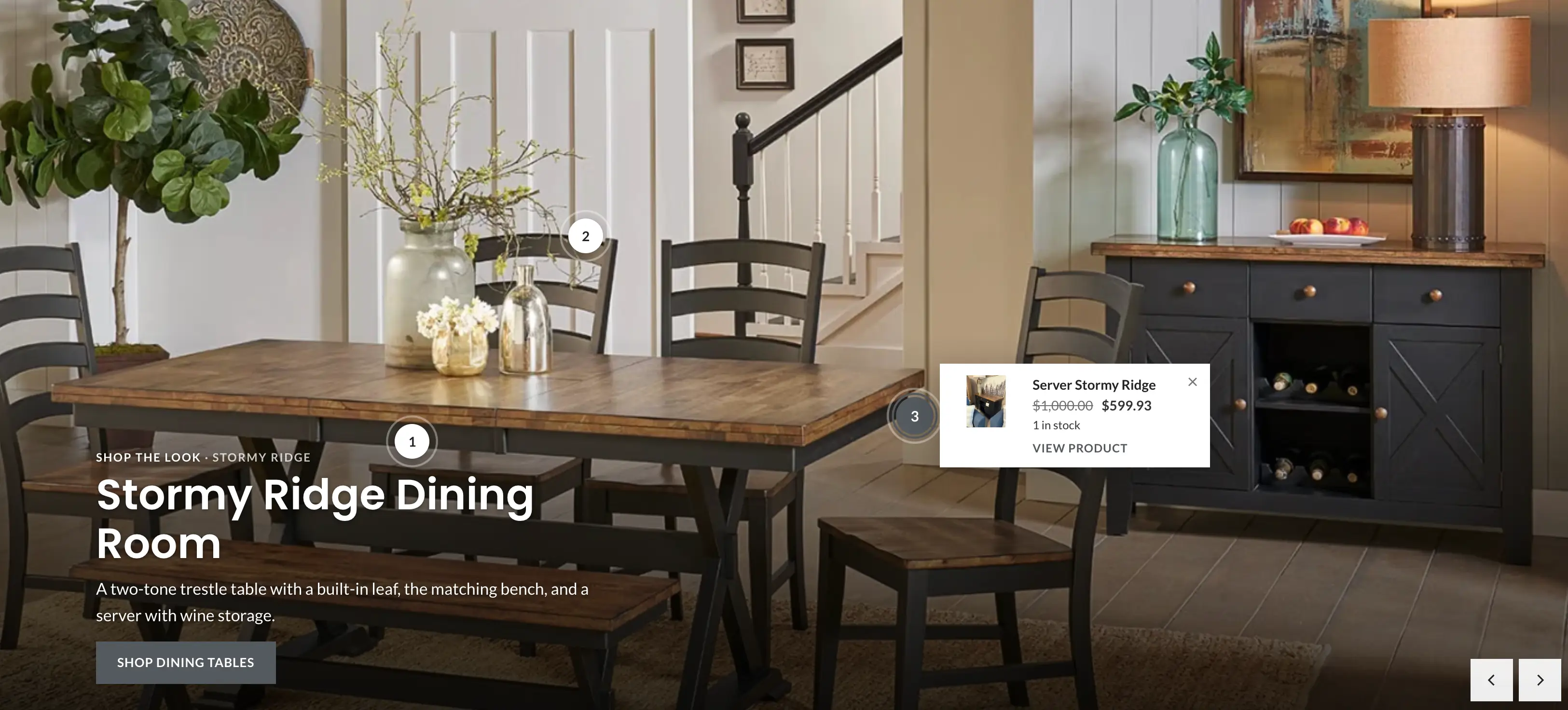
Customers rarely shop for one isolated piece. Many are trying to complete a bedroom, living room, home office, or patio setup. AI agents can build coordinated suggestions that help customers visualize an entire space.
A shopper viewing a velvet sectional may receive recommendations for:
- Complementary accent chairs
- Matching area rugs
- Lighting with similar design styles
- Storage furniture in coordinating finishes
- Decorative accessories within the same color palette
This creates a guided shopping journey instead of a disconnected browsing experience.
Furniture retailers that structure recommendations around room design often see higher engagement because shoppers spend more time exploring products that feel connected.
What Types of AI Recommendations Increase Furniture Sales the Most?
The strongest AI recommendation systems focus on timing and relevance rather than constant upselling. Customers respond better when recommendations solve a problem or simplify a decision.
High-performing furniture recommendation strategies include:
Complete-the-Room Suggestions
Customers are more likely to add products when they see how pieces work together visually. AI agents can recommend full-room combinations based on style, size, and budget.
Size-Aware Recommendations
One overlooked issue in furniture ecommerce is improper sizing. AI agents can recommend furniture based on apartment layouts, small-space needs, or large-room configurations.
For example, customers browsing compact dining tables may receive recommendations for extendable furniture or slim-profile storage pieces.
Lifestyle-Based Recommendations
AI agents can identify lifestyle signals from browsing patterns. A shopper looking at performance fabrics and storage ottomans may prioritize family-friendly furniture.
The system can then recommend:
- Easy-clean upholstery
- Rounded-edge furniture
- Durable materials
- Multi-functional storage pieces
Price-Sensitive Bundling
Many customers have strict budgets when buying furniture. AI agents can create product bundles that stay within target price ranges while increasing total order size.
Instead of promoting luxury add-ons, the system recommends practical complementary products that fit the customer’s spending behavior.
How Can AI Reduce Cart Abandonment for Furniture Retailers?
Furniture shoppers often leave carts because they need more reassurance before making a high-value purchase. AI agents help reduce hesitation by answering concerns during the buying journey.
AI-powered recommendation systems can:
- Suggest warranty options at the right moment
- Recommend products with faster delivery timelines
- Highlight best-selling fabric choices
- Show low-return products
- Surface customer-generated room inspiration
Another useful strategy involves exit-intent recommendations. If a shopper appears ready to leave, the AI can present alternative products within a lower price range or show coordinating pieces that strengthen purchase confidence.
Retailers sometimes overlook the emotional side of furniture buying. Customers want confidence that products will fit their homes, style preferences, and daily routines. AI agents support that confidence with timely guidance.
What Data Should Furniture Retailers Use for Better AI Recommendations?
AI recommendations only perform well when retailers use clean, detailed product and customer data.
Many furniture websites still rely on incomplete product tagging, which limits recommendation quality. AI systems need strong product attributes to generate accurate suggestions.
Important data inputs include:
- Furniture dimensions
- Material types
- Color variations
- Style categories
- Customer reviews
- Return patterns
- Delivery regions
- Inventory availability
Retailers should also track behavioral data such as:
- Time spent on product pages
- Saved items
- Scroll depth
- Repeat visits
- Cart modifications
One insider issue many retailers miss is inconsistent naming conventions. If products are tagged differently across categories, AI systems struggle to identify relationships between items.
Standardized product taxonomy improves recommendation accuracy significantly.
Are AI Chat Agents Replacing Traditional Furniture Sales Support?
AI chat agents are not replacing human support teams completely. They are handling repetitive guidance tasks so sales staff can focus on high-intent customers.
Furniture retailers often receive repeated questions about:
- Product dimensions
- Fabric durability
- Delivery timelines
- Assembly details
- Style matching
AI chat agents can answer these instantly while also recommending related products during conversations.
For example, if a customer asks whether a sectional fits a small apartment, the AI can suggest apartment-friendly coffee tables and compact storage furniture in the same interaction.
This creates a smoother customer journey without requiring shoppers to search through multiple categories manually.
What Mistakes Should Furniture Retailers Avoid With AI Recommendations?
Poor implementation can hurt trust and reduce conversions. AI recommendations should feel helpful, not intrusive.
Common mistakes include:
Showing Irrelevant Recommendations
Customers lose confidence when recommendations do not match browsing behavior. A shopper viewing luxury leather sofas should not suddenly receive low-cost office furniture suggestions.
Overloading Product Pages
Too many recommendation widgets create distractions. Retailers should prioritize quality over quantity.
Ignoring Inventory Levels
AI systems should avoid heavily recommending products with limited stock or long shipping delays unless alternatives are available.
Forgetting Mobile Experiences
A large percentage of furniture browsing happens on mobile devices. Recommendation layouts must remain easy to scroll and visually clear on smaller screens.
Relying Only on Purchase History
Furniture shoppers buy infrequently. AI systems should weigh current browsing intent more heavily than older purchase data.
How Can Furniture Retailers Measure AI Recommendation Success?
Retailers should look beyond clicks when measuring AI performance. The goal is revenue growth and stronger customer engagement.
Key metrics include:
- Average order value
- Bundle purchase rates
- Time on site
- Conversion rate
- Cart abandonment reduction
- Revenue per visitor
- Repeat purchase behavior
Retailers should also compare recommendation performance across customer segments. New visitors often respond differently from returning customers.
Testing matters as well. AI systems improve when retailers continuously refine product relationships, recommendation timing, and category logic.
FAQ: AI Product Recommendations for Furniture Retailers
Do AI product recommendations work better for large furniture catalogs?
Yes. Large catalogs often overwhelm shoppers. AI agents help narrow choices and surface relevant products faster, which improves customer engagement and reduces browsing fatigue.
Can smaller furniture retailers use AI recommendation tools?
Yes. Smaller retailers can use AI recommendation platforms without building custom systems from scratch. Many e-commerce platforms now include AI integrations designed for growing furniture businesses.
Will AI recommendations replace interior designers?
No. AI tools support the buying process by helping customers discover products faster. Interior designers still provide creative direction, space planning, and personalized design expertise.
How quickly can AI recommendations improve order value?
Some retailers see improvements within weeks after implementation, especially when recommendation systems focus on room bundles and complementary products. Results depend on product data quality and website structure.
What is the biggest advantage of AI for furniture ecommerce?
The biggest advantage is personalized guidance at scale. AI agents help customers find matching products, reduce decision fatigue, and create higher-value purchases without making the experience feel pushy.
Conclusion
AI agents are changing how furniture retailers guide shoppers through complex buying decisions. Smarter recommendations help customers discover matching products, build complete room layouts, and feel more confident before purchasing. This leads to stronger engagement and higher average order value.