The way your audience searches for information is fundamentally changing. Whether they are asking ChatGPT for recommendations or relying on Google’s AI Overviews, the goal is no longer to scroll through ten blue links—it is to get a direct, immediate answer.
If your brand wants to be the source of that answer, your content strategy needs an update. It turns out that AI does not just read your content; it prioritizes it based on exactly where the information lives on the page.
Stop Burying the Lead: The “Top Third” Rule
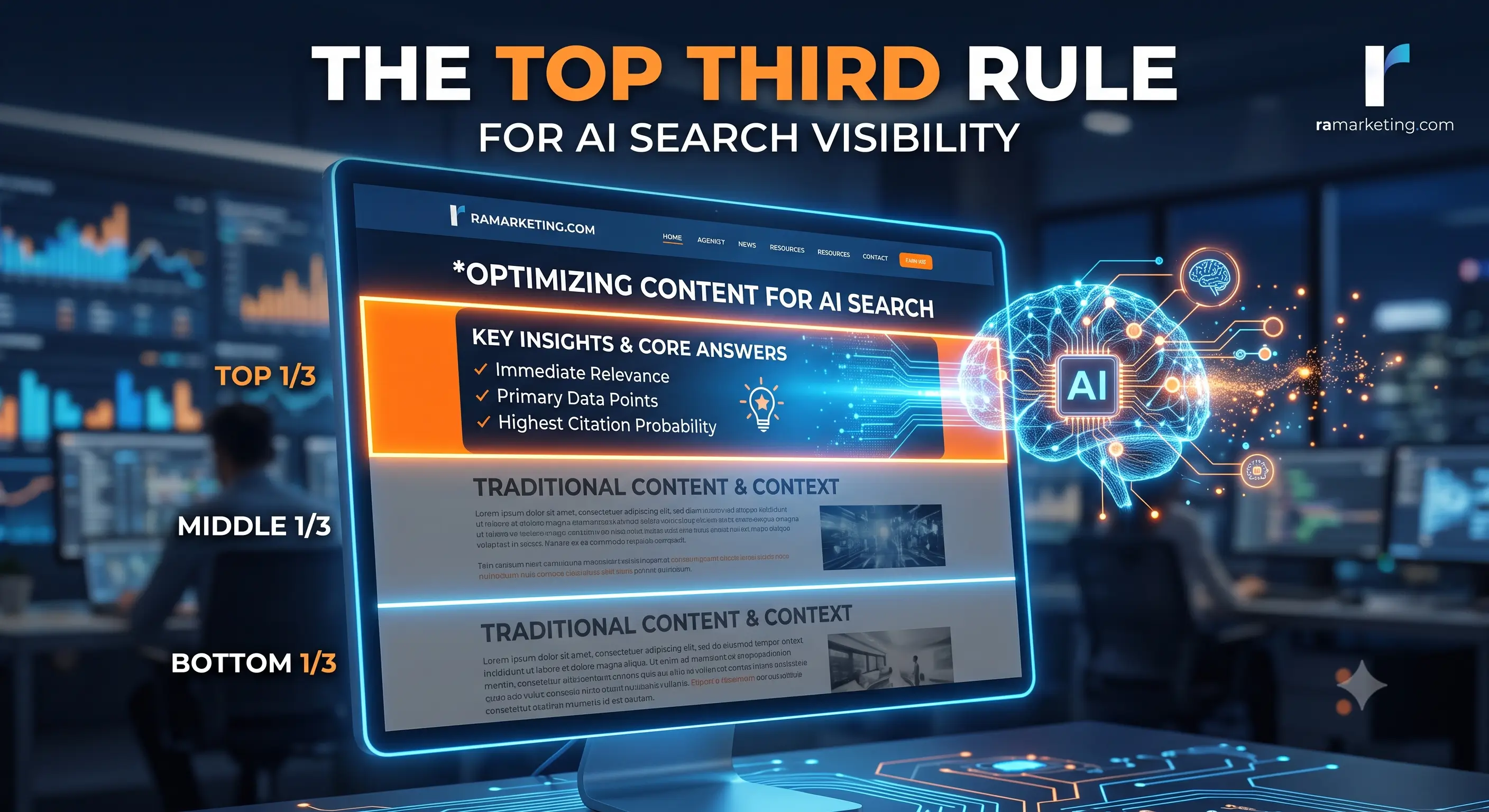
When an AI engine answers a user’s question, your opening lines are far more likely to get pulled into the response than the rest of your page.
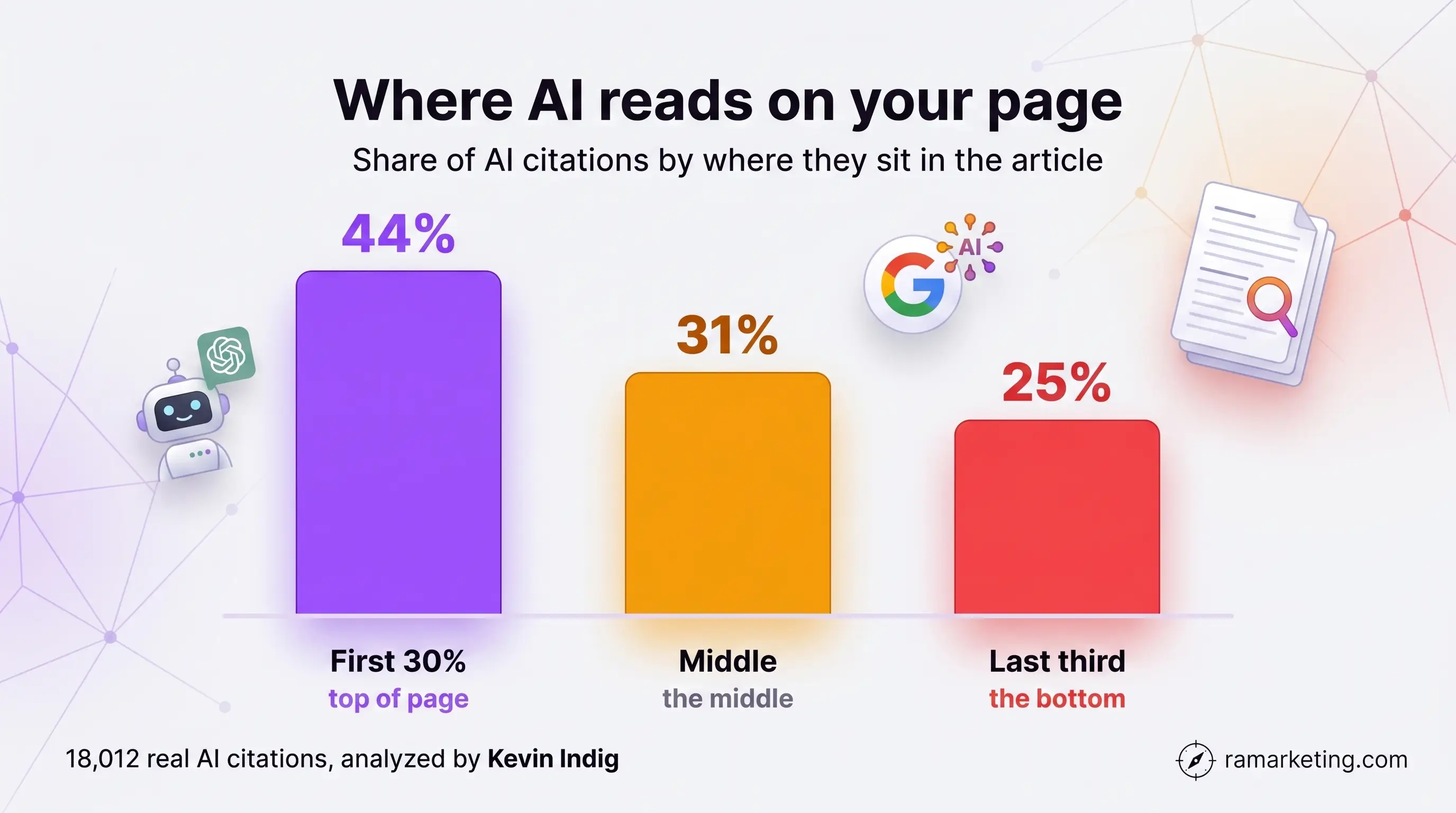
A recent analysis of 18,012 real AI citations by SEO expert Kevin Indig revealed a striking trend: 44% of all AI citations came from the top third of the webpage. This is nearly double the citation rate of the bottom third, which is exactly where most marketers tend to bury the definitive answer after long, winding introductions. Google’s AI Overviews exhibit the exact same bias. AI systems are designed for efficiency, and they look for immediate relevance at the top of the document.
How to Structure Your Pages for AI Search
To capture these high-value AI citations, adopt an inverted-pyramid approach to your content:
- Put your answer in the first two sentences. Say it straight, right up top. Do not make the AI (or the human reader) dig through three paragraphs of background context to find the actual point.
- Use the rest of the page as proof. Once the definitive answer is established at the top, dedicate the remaining sections of the page to validating it. This is where you include your rich examples, hard numbers, data visualizations, and detailed comparisons.
The Bigger Question: Does AI Recommend Your Brand?
Structuring your pages to be highly quotable is an essential first step, but there is a larger conversation happening off-page. When a prospect asks ChatGPT or Perplexity for the “best tools” or “top agencies” in your space, does it name your brand?
Whether AI actually recommends you comes down to what the rest of the web says about you. Large Language Models train on the consensus of the internet. They lean heavily on Reddit threads, third-party comparisons, digital PR mentions, and customer reviews to determine market leaders. If your off-page presence is weak, the AI will default to your competitors who have a louder, more validated digital footprint.
The Test
Don’t wait for your analytics to tell you if you are losing ground. Go ask ChatGPT or your preferred AI engine about your specific category right now. See who it names.
If your brand isn’t on that list, it is time to rethink where you are putting your answers—and what the internet is saying about you.