It is 2026. The way consumers buy sofas, dining sets, and mattresses has fundamentally changed. The days of “Call for Pricing” or “Visit Store for Price” are not just outdated—they are actively damaging your business.
In an era where a customer can compare specs, reviews, and costs of a refrigerator or a sectional in seconds from their smartphone, transparency isn’t a luxury; it’s the baseline requirement for doing business.
If you are a retailer in the furniture, mattress, or appliance space and you are still hiding your prices, you are losing approximately 84% of potential customers before they ever walk through your showroom doors.
Here is why pricing your website is the most critical move you can make this year, and how top retailers are doing it right.
The Psychology of “Call for Price”
There is a dangerous misconception in the furniture industry that hiding the price protects your margins or encourages store visits. In 2026, the opposite is true.
-
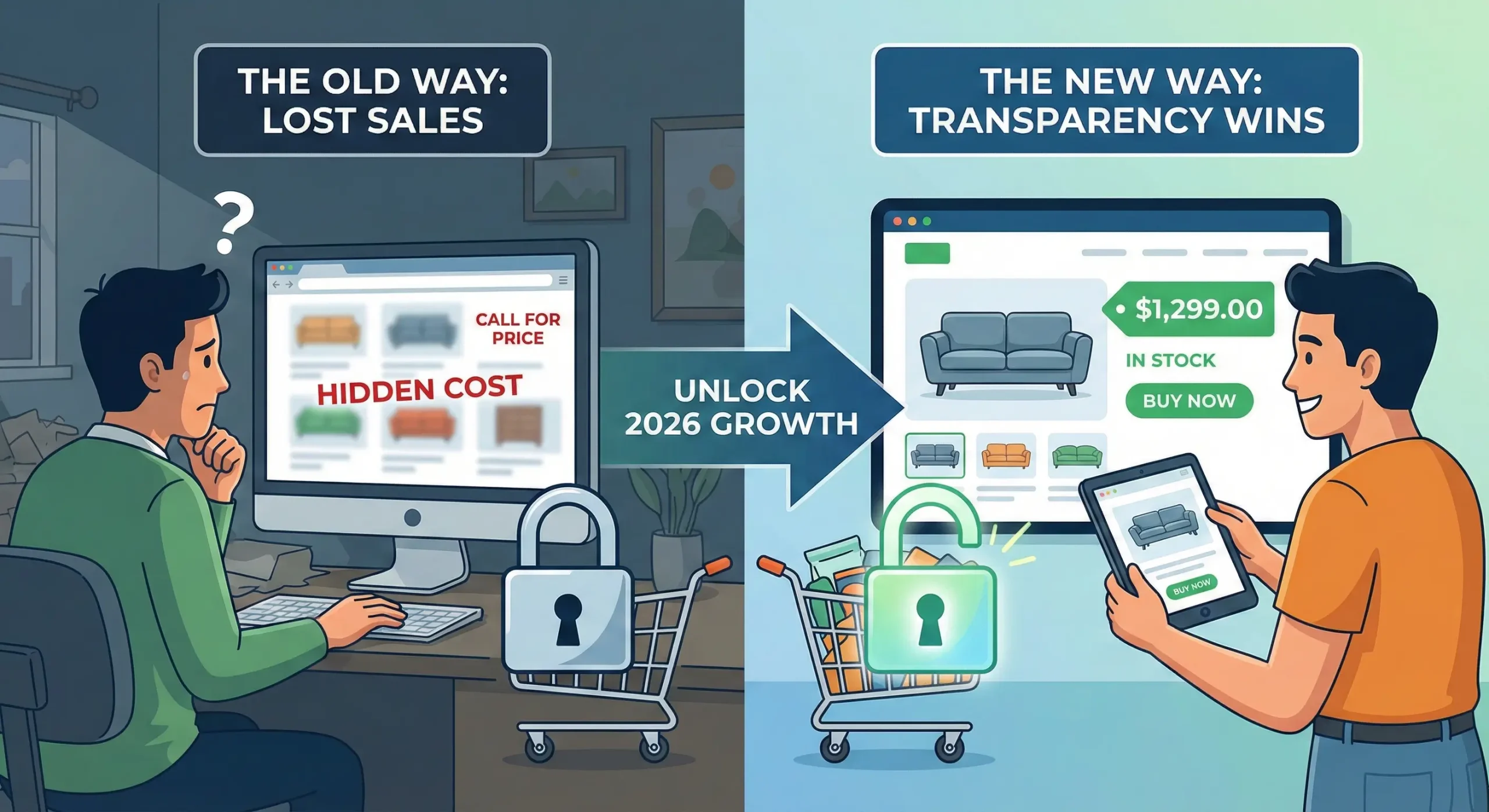
“No Price” = “Too Expensive” When a customer sees a beautiful sectional without a price tag, their brain doesn’t think, “I should call to get a deal.” It thinks, “If I have to ask, I can’t afford it.” Hiding the price creates a perception of exclusivity that alienates the mid-market buyer.
-
Trust is the New Currency Transparency equals trust. When you display your pricing, you are telling the customer you have nothing to hide. It positions your brand as professional and straightforward.
-
The Self-Qualification Filter Your sales team’s time is expensive. Do you want them fielding fifty calls a day from shoppers looking for a $300 sofa when your starting price point is $1,200? Displaying prices filters your leads. When a customer contacts you after seeing the price, you know they are qualified, serious, and ready to buy.
Examples of Excellence: How It’s Done
Successful retailers are already leveraging price transparency to drive sales. Let’s look at four examples of how pricing is executed effectively in the home furnishings sector.
1. Talsma Furniture: The Power of the Deal
Visit: Talsma Furniture
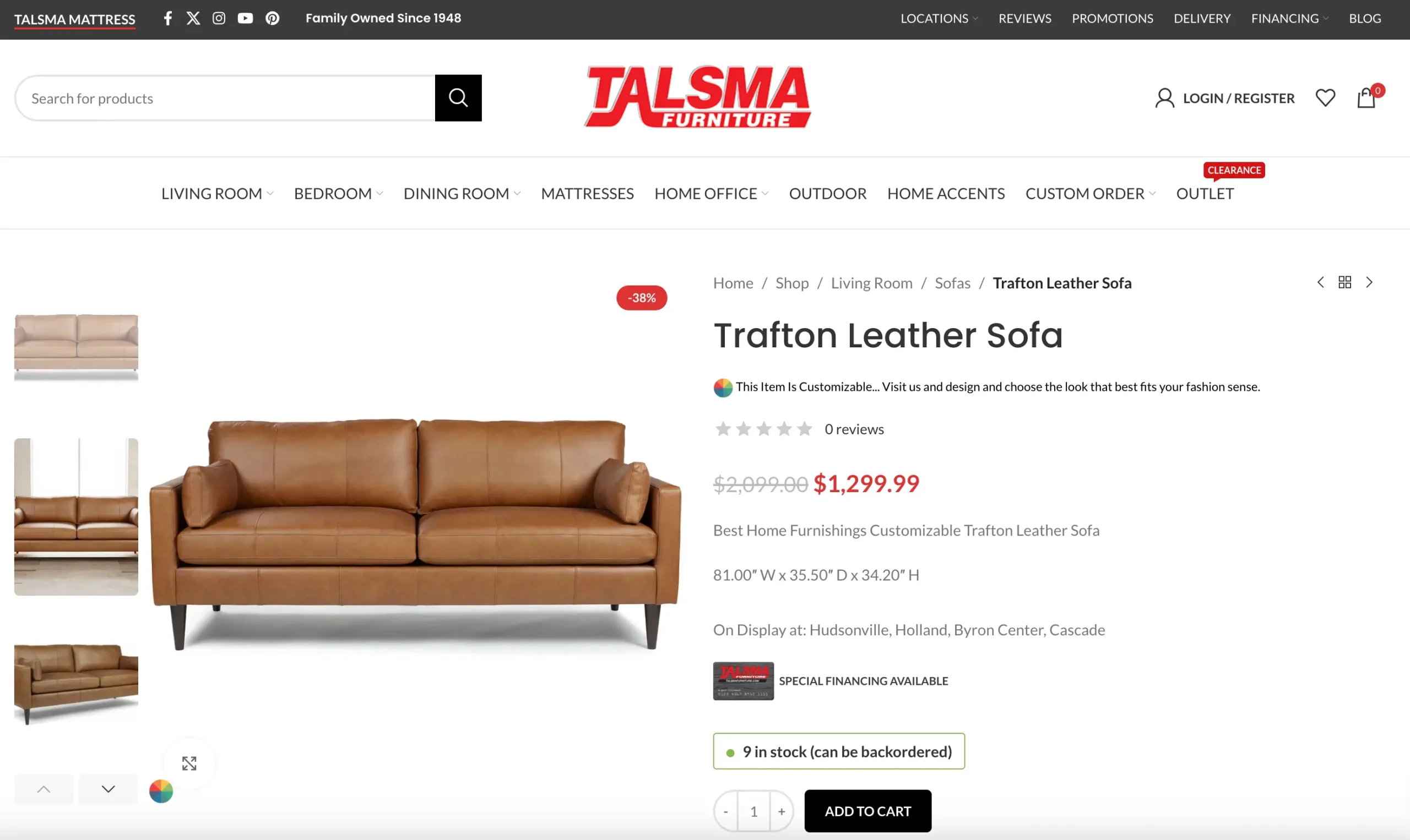
Talsma Furniture demonstrates exactly how pricing drives urgency. By showing the MSRP ($2,099.00) slashed down to a sale price ($1,299.99), they anchor the value immediately. Furthermore, they display “9 in stock” and “Special Financing Available.” This answers the three biggest questions a customer has: How much is it? Can I get a deal? And can I get it today?
2. Short Furniture: The Frictionless Purchase
Visit: Short Furniture
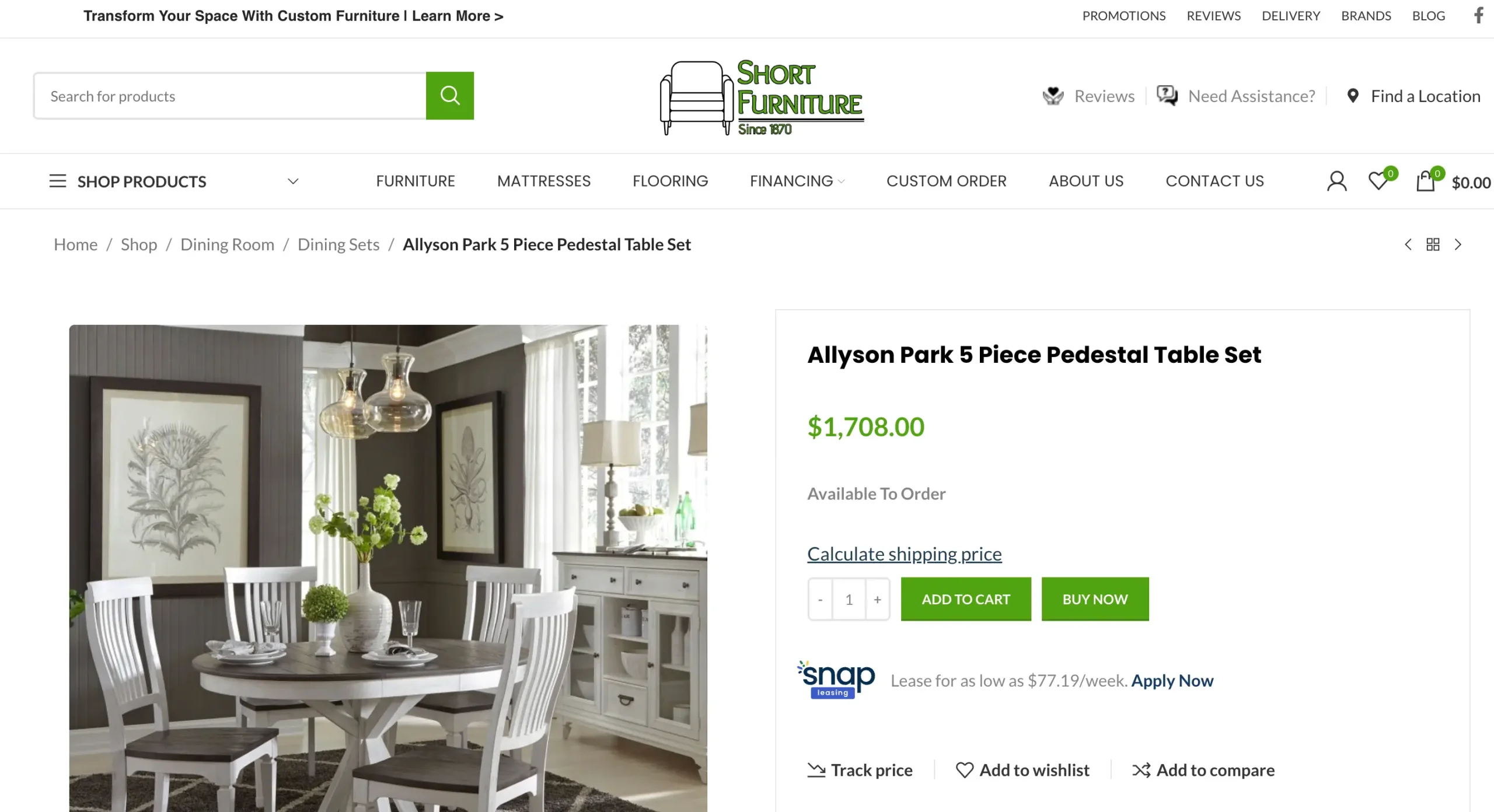
Short Furniture proves that even higher-ticket items, like a $1,708 dining set, should be priced clearly. Their product page is clean, showing the price in green (signaling “go”), with immediate options to “Add to Cart” or “Buy Now.” They remove the friction between browsing and buying.
3. Montgomery’s: Connecting Online to In-Store
Visit: Montgomery’s
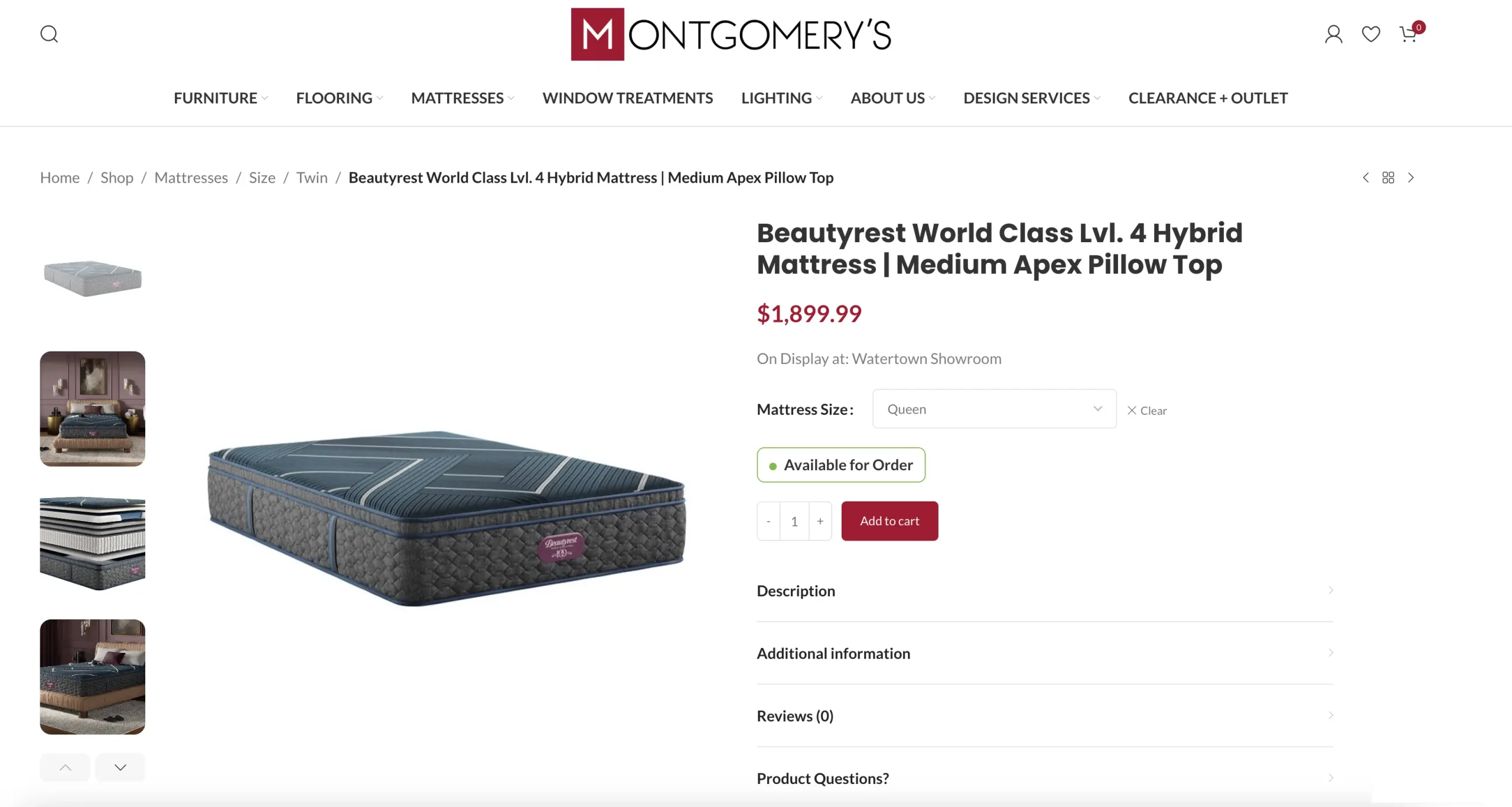
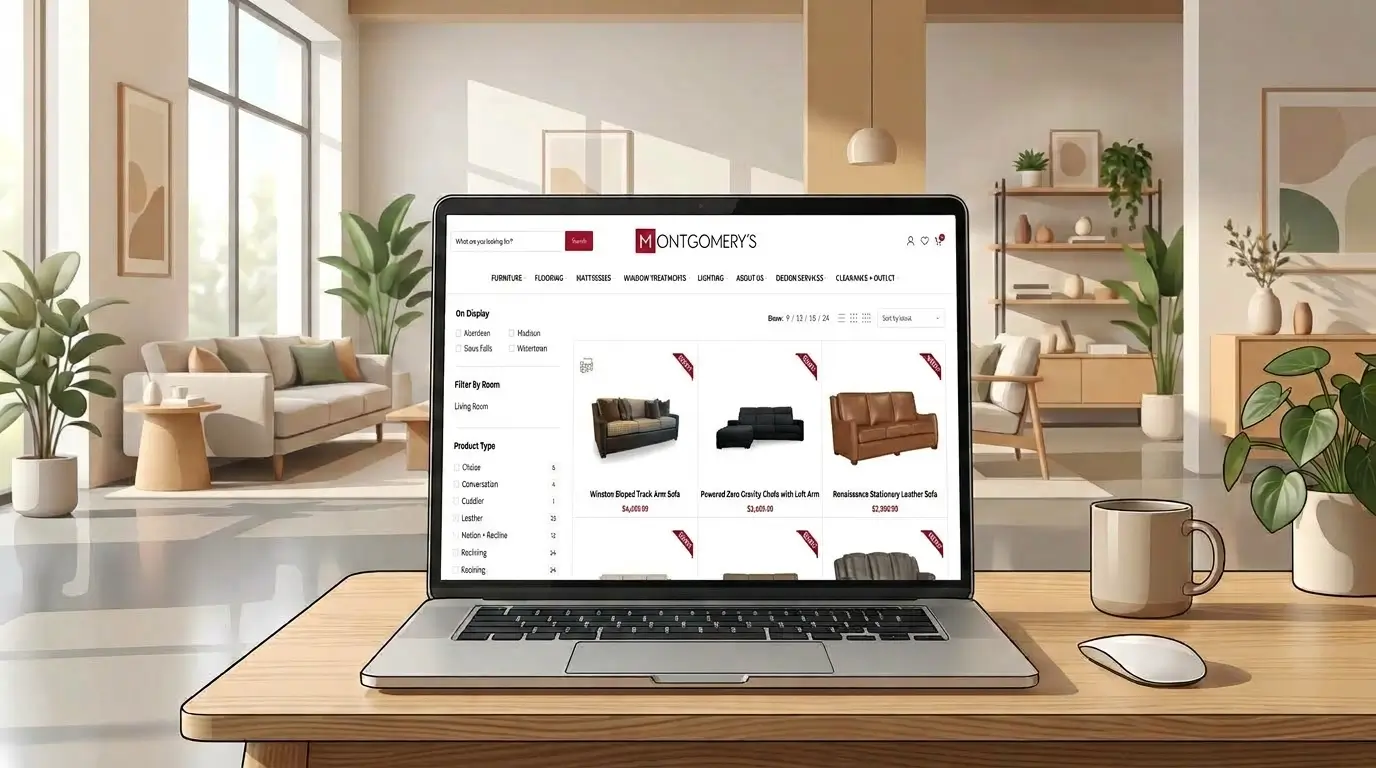
Montgomery’s does a brilliant job of using the website to drive foot traffic. On their Beautyrest mattress page, they list the price clearly ($1,899.99), but they also include a critical detail: “On Display at: Watertown Showroom.” They use the price to qualify the buyer, and the location data to drive them into the store to test the comfort level.
4. Swann’s: The Catalog Strategy
Visit: Swann’s

You don’t always need to show a single product view to be effective. Swann’s category pages allow users to scan prices across different styles instantly. By showing the “Strikethrough” pricing on their accent chairs, they allow the customer to browse by budget without clicking into every single item. This respects the customer’s time and keeps them engaged on the site longer.
How to Add Pricing to Your Website (3 Proven Methods)
If you are ready to stop losing leads and start closing sales, here are the three ways to get pricing on your site, ranging from automated to manual.
1. Automate via Manufacturer Data
The easiest way to populate your site is to ask your manufacturers and brand partners for a digital price list. Most major furniture and appliance brands have data feeds available that include MAP (Minimum Advertised Price) or MSRP. You can use these files to bulk-upload pricing, ensuring you are always compliant with brand standards without manual data entry.
2. Integrate with Your POS/ERP System
This is the gold standard for high-volume retailers. By connecting your website directly to your Point of Sale (POS) or ERP system, your website becomes a living reflection of your business.
-
Updates in real-time: When you change a price in the store, it changes on the web.
-
Inventory Sync: Show customers exactly what is in stock (like Talsma and Montgomery’s).
-
Learn more about integrations here: RA Marketing ERP Integrations
3. The “Elbow Grease” Method (Manual Pricing)
If you don’t have a fancy ERP or manufacturer feeds, you are not excused from pricing. Start with the 80/20 rule. Manually price your top 20% best-sellers. Yes, it is hard work. Yes, it takes time. But considering that these products likely make up the majority of your revenue, the work is worth the payout. If your services are custom (like interior design or custom upholstery), use “Starting At” pricing to give customers a realistic budget expectation while maintaining flexibility.
The Bottom Line
In 2026, a website without prices is just a digital brochure that nobody wants to read. Your customers are savvy, busy, and ready to buy—but only if you give them the information they need. Follow the lead of retailers like Talsma, Short, Montgomery’s, and Swann’s: Show the price, build the trust, and win the sale.